Why hasn't anyone shipped a consumer AI inference chip yet?
消費級 AI 推論晶片到底什麼時候才會出現?
It's a fair question: billions have flooded into AI startups, but where's the $200 USB stick that runs Llama 3 locally on your desktop at reading speed? The tech already exists—today's open models are good enough for 90% of what regular people actually need. Sure, Taalas is doing something similar, but only for datacenters. The "models become obsolete before the chip ships" excuse doesn't really hold up anymore. So what's the actual bottleneck?
Tech Blogger Take
The $200 AI chip that could change everything is stuck in development hell
Someone just asked the question that's been bugging me for months: with billions flooding into AI and open models that are genuinely useful, why can't I buy a $200 USB stick that runs Llama 3 at reading speed on my laptop? The technology exists — we've got models that handle 90% of what normal people actually want to do, and companies like Taalas are already shipping inference chips for datacenters. But somehow, nobody's cracked the consumer market. The usual excuse about 'models becoming obsolete before chips ship' doesn't hold water anymore when Llama 3 is already good enough for most real-world tasks. The real bottleneck isn't technical — it's that hardware companies are terrified of being the ones holding the bag if the AI bubble pops. Meanwhile, early adopters are sitting here with our credit cards out, ready to throw money at whoever solves this first.
VerdictThe first company to ship a decent consumer AI chip at $200 will own the next decade — go find their Series A and throw your money at it.
8/10
AI Analysis
Consumer Electronics
high
Action Required
Start prototyping AI-first devices now — the window for being first to market is closing fast
Key Insight
The hardware bottleneck isn't technical anymore — it's that nobody wants to be the company that ships a $200 paperweight if the AI hype crashes
Why It Matters
Your next laptop purchase could be the last one without dedicated AI silicon, and early adopters will have a massive productivity advantage
Job Impact Analysis
Hardware Engineer
Role Shift
Why It Impacts
The race for consumer AI chips is about to explode — whoever cracks the $200 price point first wins the entire market
How to Adapt
Dust off those ASIC design skills and start networking with AI startups — this is your iPhone moment
Product Manager
Opportunity
Why It Impacts
Consumer AI hardware represents the biggest untapped market since smartphones, but requires navigating the 'good enough' vs 'cutting edge' balance
How to Adapt
Research what actual humans want to do with local AI and build backwards from there — ignore the datacenter playbook
Specialized processors designed to run AI models efficiently, like the hypothetical $200 USB stick mentioned in the article that could run Llama 3 locally on your computer.
Llama 3(Llama 3模型)
Meta's open-source language model that's become the gold standard for local AI — good enough for 90% of what regular people want to do, as highlighted in the article.
Local AI(本地AI)
Running AI models on your own device instead of in the cloud — the whole point of that missing $200 consumer chip that would let you use AI without internet dependency.
Related Articles
OpinionsRead
OpenAI Livestream
OpenAI is hosting a livestream event. Details about the specific announcements, product launches, or demonstrations will be revealed during the broadcast.
The last time OpenAI did an unannounced livestream, they dropped GPT-4 Turbo and changed pricing overnight
OpinionsRead
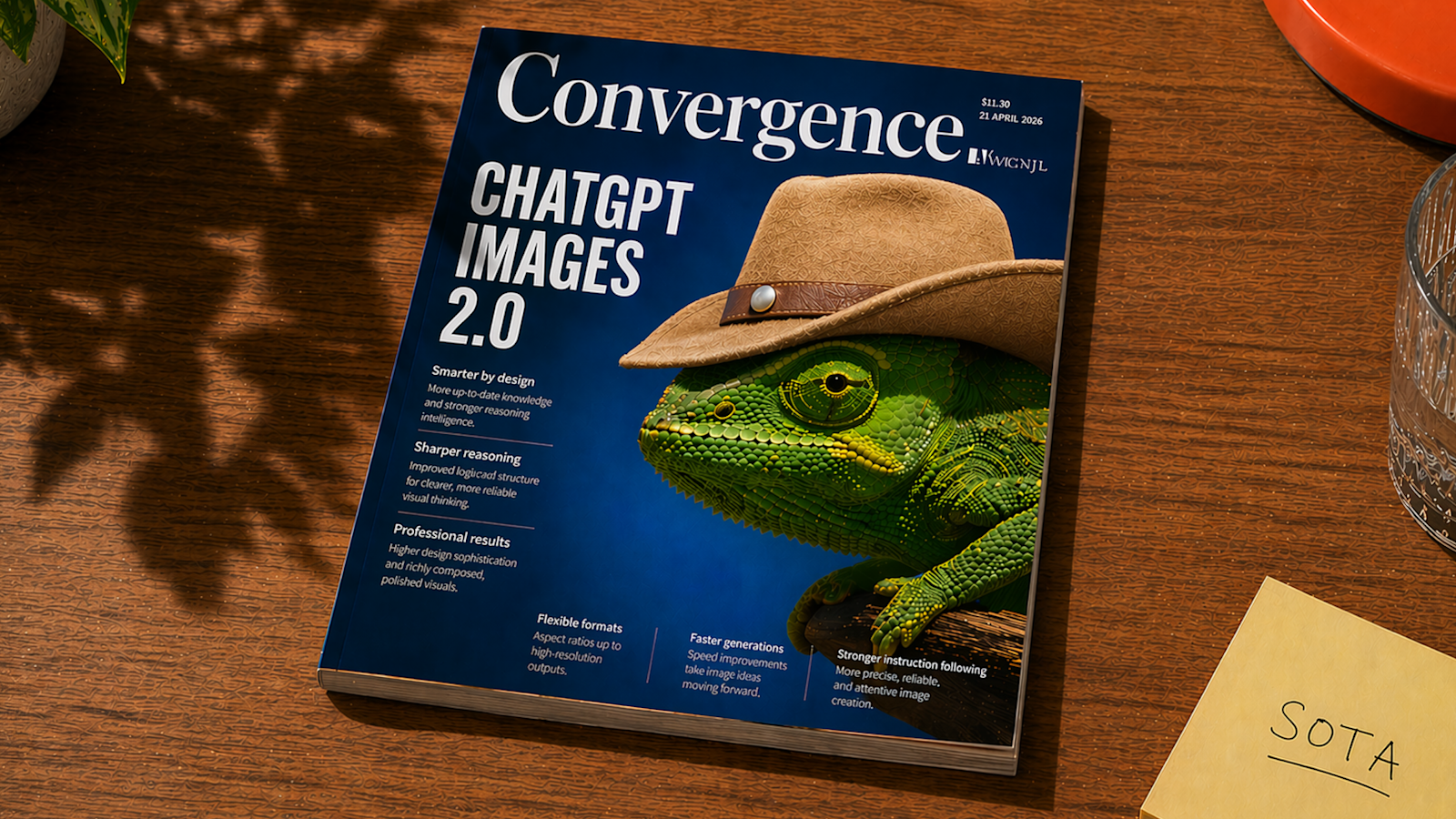
ChatGPT Images 2.0
OpenAI is launching ChatGPT Images 2.0 with major upgrades to image generation capabilities. Watch the livestream announcement at https://openai.com/live/
OpenAI is positioning this as a direct competitor to established image generation tools, suggesting they're confident enough to challenge the current market leaders
OpinionsRead
The "just wait 6 months" argument from 2025 survived exactly one iteration
Throughout 2025 the standard response to any complaint about an LLM was some version of "just wait 3-6 months, the next generation will handle this effortlessly." The argument was everywhere. Every limitation was temporary, every missing capability was a few iterations away, every autonomous agent demo was a preview of imminent reality.
It's April 2026 now and worth checking how that held up.
On r/ClaudeAI this week there's a long thread about Opus 4.7 where multiple users argue it's a regress
OpinionsRead
Mistral Medium 3.5 on AMD Strix Halo: Painfully Slow (Plan for Overnight Runs)
Someone actually tested Mistral Medium 3.5 on AMD's new Strix Halo chip, and the results are... not great. For a 48k-token prompt with 4k thinking tokens, it took about 2 hours just to get an answer about code architecture. Yeah, you read that right—two hours. The takeaway: if you want to run this locally on Strix Halo, queue it up before bed. The technical setup involved heavy optimization (Q5_K_XL quantization, GPU acceleration with -ngl 999, cache reuse), but even with all that tuning, it's still a crawl. Not exactly the "instant local AI" dream, but hey, at least it works.


Tech Blogger Take
The $200 AI chip that could change everything is stuck in development hell
Someone just asked the question that's been bugging me for months: with billions flooding into AI and open models that are genuinely useful, why can't I buy a $200 USB stick that runs Llama 3 at reading speed on my laptop? The technology exists — we've got models that handle 90% of what normal people actually want to do, and companies like Taalas are already shipping inference chips for datacenters. But somehow, nobody's cracked the consumer market. The usual excuse about 'models becoming obsolete before chips ship' doesn't hold water anymore when Llama 3 is already good enough for most real-world tasks. The real bottleneck isn't technical — it's that hardware companies are terrified of being the ones holding the bag if the AI bubble pops. Meanwhile, early adopters are sitting here with our credit cards out, ready to throw money at whoever solves this first.
AI Analysis
Consumer Electronics
highStart prototyping AI-first devices now — the window for being first to market is closing fast
The hardware bottleneck isn't technical anymore — it's that nobody wants to be the company that ships a $200 paperweight if the AI hype crashes
Your next laptop purchase could be the last one without dedicated AI silicon, and early adopters will have a massive productivity advantage
Job Impact Analysis
Hardware Engineer
Role ShiftThe race for consumer AI chips is about to explode — whoever cracks the $200 price point first wins the entire market
Dust off those ASIC design skills and start networking with AI startups — this is your iPhone moment
Product Manager
OpportunityConsumer AI hardware represents the biggest untapped market since smartphones, but requires navigating the 'good enough' vs 'cutting edge' balance
Research what actual humans want to do with local AI and build backwards from there — ignore the datacenter playbook