Anthropic has released new AI capabilities that could fundamentally disrupt design tools like Figma. The update enables AI to understand and generate design systems, potentially automating tasks that designers currently spend hours on. If this technology matures, it could reshape how design work gets done—and whether companies need expensive design software subscriptions at all.
Tech Blogger Take
Anthropic just dropped a design tool killer and nobody's talking about it
While everyone's obsessing over ChatGPT's latest party tricks, Anthropic quietly released AI capabilities that could make Figma look like Microsoft Paint. We're talking about AI that doesn't just generate pretty pictures—it understands design systems, maintains consistency across components, and can build entire UI libraries from scratch. The implications are staggering: why pay $144/year per designer for Figma when AI can do the heavy lifting for free? But here's what's really wild—this isn't some distant future scenario. The technology is here now, and it's already good enough to automate the tedious parts of design work that eat up 70% of most designers' time. The question isn't whether this will disrupt the design tool market, it's whether Figma can adapt fast enough to survive.
VerdictIf you're still manually building component libraries, drop everything and test Anthropic's design capabilities at claude.ai—your workflow is about to get demolished.
A collection of reusable components and guidelines that ensure consistent design across products—what Anthropic's AI can now generate automatically instead of designers spending weeks building manually.
Component Library(組件庫)
A set of pre-built UI elements (buttons, forms, etc.) that designers reuse across projects—the tedious work that AI can now handle, potentially making tools like Figma less essential.
Figma(Figma設計工具)
The dominant collaborative design platform that charges $144/year per user—now potentially threatened by AI that can do similar work for free.
Related Articles
OpinionsRead
OpenAI Livestream
OpenAI is hosting a livestream event. Details about the specific announcements, product launches, or demonstrations will be revealed during the broadcast.
The last time OpenAI did an unannounced livestream, they dropped GPT-4 Turbo and changed pricing overnight
OpinionsRead
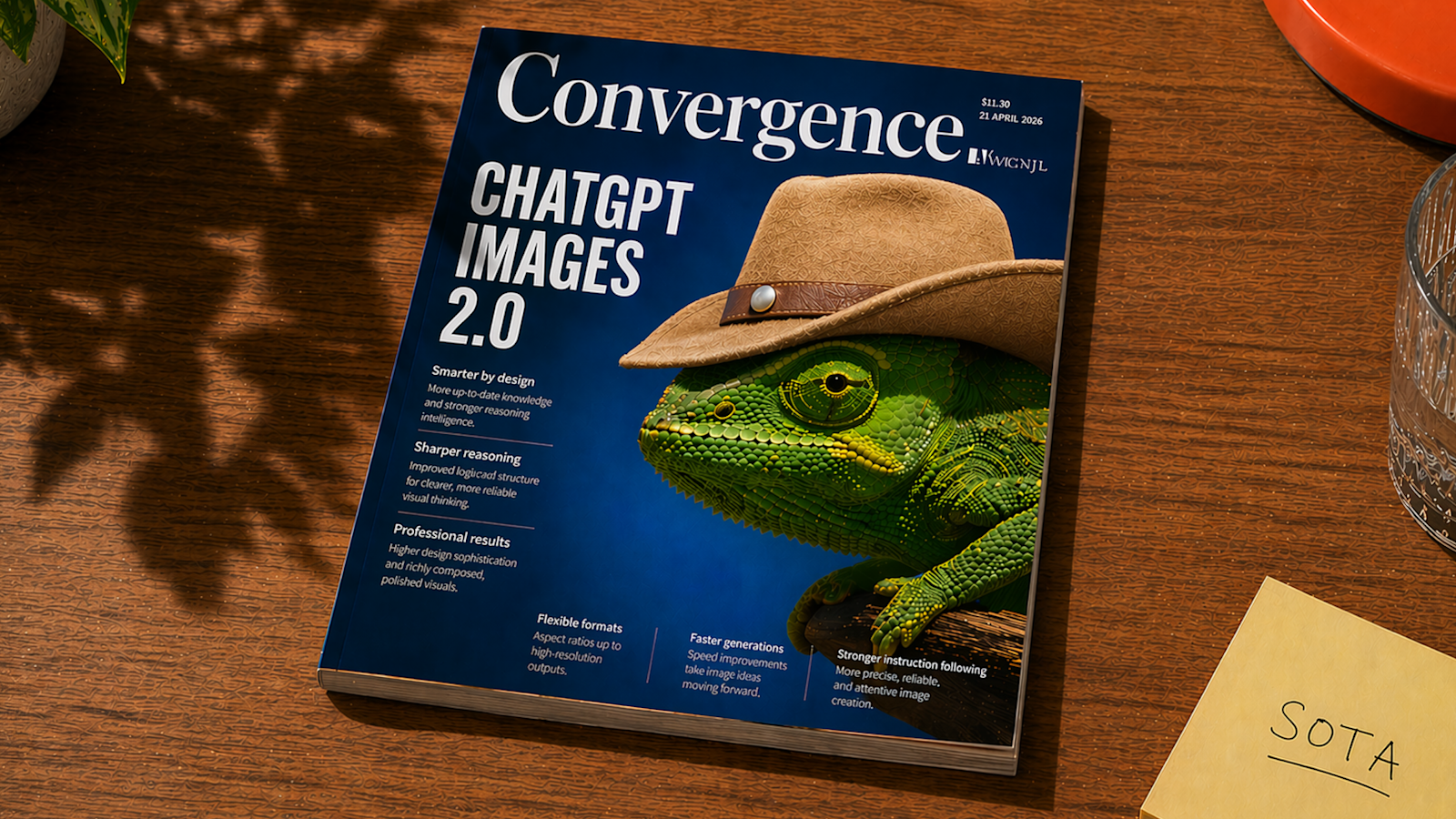
ChatGPT Images 2.0
OpenAI is launching ChatGPT Images 2.0 with major upgrades to image generation capabilities. Watch the livestream announcement at https://openai.com/live/
OpenAI is positioning this as a direct competitor to established image generation tools, suggesting they're confident enough to challenge the current market leaders
OpinionsRead
The "just wait 6 months" argument from 2025 survived exactly one iteration
Throughout 2025 the standard response to any complaint about an LLM was some version of "just wait 3-6 months, the next generation will handle this effortlessly." The argument was everywhere. Every limitation was temporary, every missing capability was a few iterations away, every autonomous agent demo was a preview of imminent reality.
It's April 2026 now and worth checking how that held up.
On r/ClaudeAI this week there's a long thread about Opus 4.7 where multiple users argue it's a regress
OpinionsRead
Mistral Medium 3.5 on AMD Strix Halo: Painfully Slow (Plan for Overnight Runs)
Someone actually tested Mistral Medium 3.5 on AMD's new Strix Halo chip, and the results are... not great. For a 48k-token prompt with 4k thinking tokens, it took about 2 hours just to get an answer about code architecture. Yeah, you read that right—two hours. The takeaway: if you want to run this locally on Strix Halo, queue it up before bed. The technical setup involved heavy optimization (Q5_K_XL quantization, GPU acceleration with -ngl 999, cache reuse), but even with all that tuning, it's still a crawl. Not exactly the "instant local AI" dream, but hey, at least it works.


Tech Blogger Take
Anthropic just dropped a design tool killer and nobody's talking about it
While everyone's obsessing over ChatGPT's latest party tricks, Anthropic quietly released AI capabilities that could make Figma look like Microsoft Paint. We're talking about AI that doesn't just generate pretty pictures—it understands design systems, maintains consistency across components, and can build entire UI libraries from scratch. The implications are staggering: why pay $144/year per designer for Figma when AI can do the heavy lifting for free? But here's what's really wild—this isn't some distant future scenario. The technology is here now, and it's already good enough to automate the tedious parts of design work that eat up 70% of most designers' time. The question isn't whether this will disrupt the design tool market, it's whether Figma can adapt fast enough to survive.
Action
馬上試用Spending weeks building component libraries and design systems manually in Figma
Generating entire design systems with consistent components in minutes through AI prompts
AI Analysis
Design Software
highStart experimenting with AI-powered design workflows now before your competitors do
Anthropic's AI can already understand design systems well enough to generate consistent components—something that took Figma years to perfect
Your $144/year Figma subscription might become as obsolete as your old Photoshop license
Product Design
highBegin integrating AI tools into your design process to stay competitive
The AI can generate entire design systems from simple prompts, potentially replacing weeks of component library work
You could either become the designer who leverages AI to 10x their output, or the one who gets replaced by someone who does
Job Impact Analysis
UX/UI Designer
Role ShiftAI can now automate design system creation and component generation that currently takes designers hours
Learn to prompt and direct AI design tools—become the designer who uses AI, not the one replaced by it
Design System Manager
At RiskAI can generate consistent design systems automatically, potentially eliminating the need for dedicated system maintenance roles
Pivot toward AI tool integration and cross-functional collaboration skills immediately
Product Manager
OpportunityFaster design iteration means shorter product cycles and reduced dependency on design team bottlenecks
Start planning how AI-accelerated design workflows could compress your product development timeline