The AI industry's race for profits is now existential
AI 產業的獲利競賽已成生死攸關之事
Today on Decoder, let's talk about the looming AI monetization cliff, and whether some of the biggest companies in the space can become real, profitable businesses before they careen right off it.
My guest today is Hayden Field, who's our senior AI reporter here at The Verge. She's been keeping close tabs on both Anthropic and OpenAI, and how these two companies in particular tell us a whole lot about the AI industry in 2026.
You've certainly heard a version of the monetization cliff story before. The biggest AI firms are built off the back of hundreds of billions in capital investment, and they're linked to even greater amounts of forward-looking investment in data center build-out, chips, and other infrastructure spend. At some point, the profits have to materialize, or the bubble pops. Maybe AGI arrives, maybe the economy crashes, who knows.
You've heard me ask some version of this question to scores of CEOs here on this show, and a majority of them have hinted toward the bubble popping — they think some companies will fail in spectacular fashion, some will succeed, and the opportunities, especially the money, are simply too big to ignore. We're doing this, whether we want to or not — the market depends on it.
So these last few weeks have felt like a very important inflection point, as both Anthropic and OpenAI have started to react to the reality of needing to go public — needing to make money.
The catalyst for this change is AI agents, and products like Claude Code and Cowork, as well as the open-source OpenClaw and OpenAI's Codex, have radically changed how these companies are thinking about their resources. And this is starting to affect how they behave — the products they support or suddenly kill, the restrictions they impose on customers, and the money they're willing to burn toward their next big milestone.
That's because agents are valuable to customers right now, but agents also use far more compute. So the way people are using agents is burning tokens at a rate way faster than these companies anticipated, and that's causing them to make hard decisions.
We saw this most evidently last month when OpenAI abruptly killed its video-generation app Sora, ditching a $1 billion Disney licensing deal in the process. Why? It costs too much to run, and OpenAI needs the compute for Codex. We saw it again just last week, when Anthropic decided it would no longer let Claude users burn through compute resources using the OpenClaw agent framework through a standard subscription plan, instead forcing those users onto pay-as-you-go plans, which cost substantially more.
As you'll hear Hayden explain here, these are glimmers of a make-or-break moment for the AI industry, as both Anthropic and OpenAI barrel toward two of the biggest IPOs in history. And the pressure on these companies to make money has never been this intense.
The projections these companies have made, which just this week were leaked to the Wall Street Journal, tell a story of mind-boggling growth, to the tune of hundreds of billions in revenue and profitability by the end of the decade. But the most important questions now are can the AI companies pull this off, and what compromises will they make to reach that goal and avoid crashing and burning?
AI monetization cliffprofitabilityIPOAI agentscompute costsClaudeCodexSoratoken burnventure capital
Related Articles
OpinionsRead
OpenAI Livestream
OpenAI is hosting a livestream event. Details about the specific announcements, product launches, or demonstrations will be revealed during the broadcast.
The last time OpenAI did an unannounced livestream, they dropped GPT-4 Turbo and changed pricing overnight
OpinionsRead
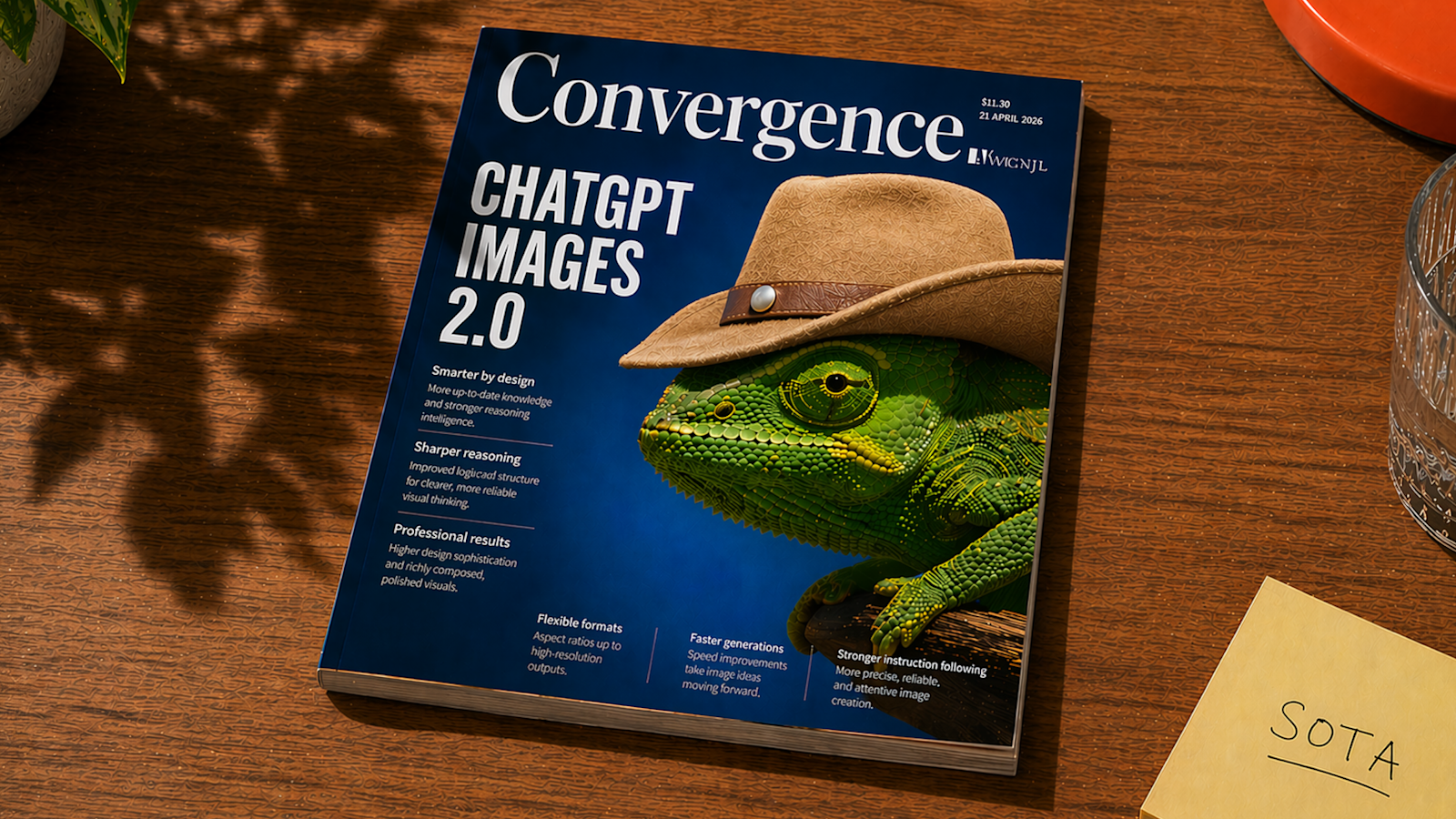
ChatGPT Images 2.0
OpenAI is launching ChatGPT Images 2.0 with major upgrades to image generation capabilities. Watch the livestream announcement at https://openai.com/live/
OpenAI is positioning this as a direct competitor to established image generation tools, suggesting they're confident enough to challenge the current market leaders
OpinionsRead
The "just wait 6 months" argument from 2025 survived exactly one iteration
Throughout 2025 the standard response to any complaint about an LLM was some version of "just wait 3-6 months, the next generation will handle this effortlessly." The argument was everywhere. Every limitation was temporary, every missing capability was a few iterations away, every autonomous agent demo was a preview of imminent reality.
It's April 2026 now and worth checking how that held up.
On r/ClaudeAI this week there's a long thread about Opus 4.7 where multiple users argue it's a regress
OpinionsRead
Mistral Medium 3.5 on AMD Strix Halo: Painfully Slow (Plan for Overnight Runs)
Someone actually tested Mistral Medium 3.5 on AMD's new Strix Halo chip, and the results are... not great. For a 48k-token prompt with 4k thinking tokens, it took about 2 hours just to get an answer about code architecture. Yeah, you read that right—two hours. The takeaway: if you want to run this locally on Strix Halo, queue it up before bed. The technical setup involved heavy optimization (Q5_K_XL quantization, GPU acceleration with -ngl 999, cache reuse), but even with all that tuning, it's still a crawl. Not exactly the "instant local AI" dream, but hey, at least it works.