Are "AI stacks" actually better than using a single model for academic work?
用多個 AI 工具「疊堆」做功課真的比較好嗎?還是根本在自找麻煩
Hey everyone, I've been experimenting with different AI tools for university work, and I keep seeing people recommend using a "stack" (e.g., ChatGPT + Claude + Perplexity + NotebookLM), where each tool is used for a specific task. However, I'm starting to wonder if this is actually more efficient, or just overcomplicating things. From my experience, switching between tools can break workflow continuity, create inconsistencies in outputs, and add friction when managing sources and drafts.
Tech Blogger Take
Students are ditching AI tool stacks, and honestly, they're right
A university student just called out the entire AI productivity guru ecosystem, and it's beautiful. While everyone's building elaborate workflows with ChatGPT for brainstorming, Claude for writing, Perplexity for research, and NotebookLM for synthesis, actual students are saying 'this is exhausting.' They're switching between apps, losing context, managing different conversation histories, and dealing with inconsistent outputs. The friction isn't worth the marginal gains. What's fascinating is this mirrors what happened with productivity apps — remember when everyone had 12 different tools for task management? The winners were always the ones that did 80% of everything reasonably well, not the specialists. Students are choosing cognitive ease over theoretical optimization, and they're probably making the smarter choice.
VerdictPick your best AI tool and go deep instead of wide — your future self will thank you for the simplicity.
7/10
AI Analysis
Education Technology
high
Action Required
Stop building complex AI workflows and focus on one tool that handles 80% of student needs seamlessly
Key Insight
The biggest EdTech companies are quietly simplifying their AI offerings because students abandon multi-tool workflows within weeks
Why It Matters
Your students are choosing the path of least resistance — if your platform isn't that path, they're using something else
Job Impact Analysis
Academic Researcher
Opportunity
Why It Impacts
This workflow friction insight reveals why many researchers stick with basic ChatGPT despite having access to specialized tools
How to Adapt
Audit your current AI workflow — if you're using more than 2 tools regularly, consolidate to your most versatile one
Educational Consultant
Role Shift
Why It Impacts
Students are rejecting the multi-tool approach consultants keep recommending, creating a gap between advice and reality
How to Adapt
Test single-tool workflows with real students before recommending complex AI stacks to institutions
Using multiple AI tools together, each specialized for different tasks — like ChatGPT for brainstorming, Claude for writing, Perplexity for research. Sounds efficient in theory, creates workflow chaos in practice.
Workflow Continuity(工作流程連續性)
The ability to maintain focus and context while working. As this student discovered, jumping between AI tools breaks your mental flow and forces you to re-establish context each time.
Context Switching(情境切換)
The mental overhead of moving between different tools or tasks. In AI workflows, this means explaining your project background to each new tool and managing multiple conversation threads.
Related Articles
OpinionsRead
OpenAI Livestream
OpenAI is hosting a livestream event. Details about the specific announcements, product launches, or demonstrations will be revealed during the broadcast.
The last time OpenAI did an unannounced livestream, they dropped GPT-4 Turbo and changed pricing overnight
OpinionsRead
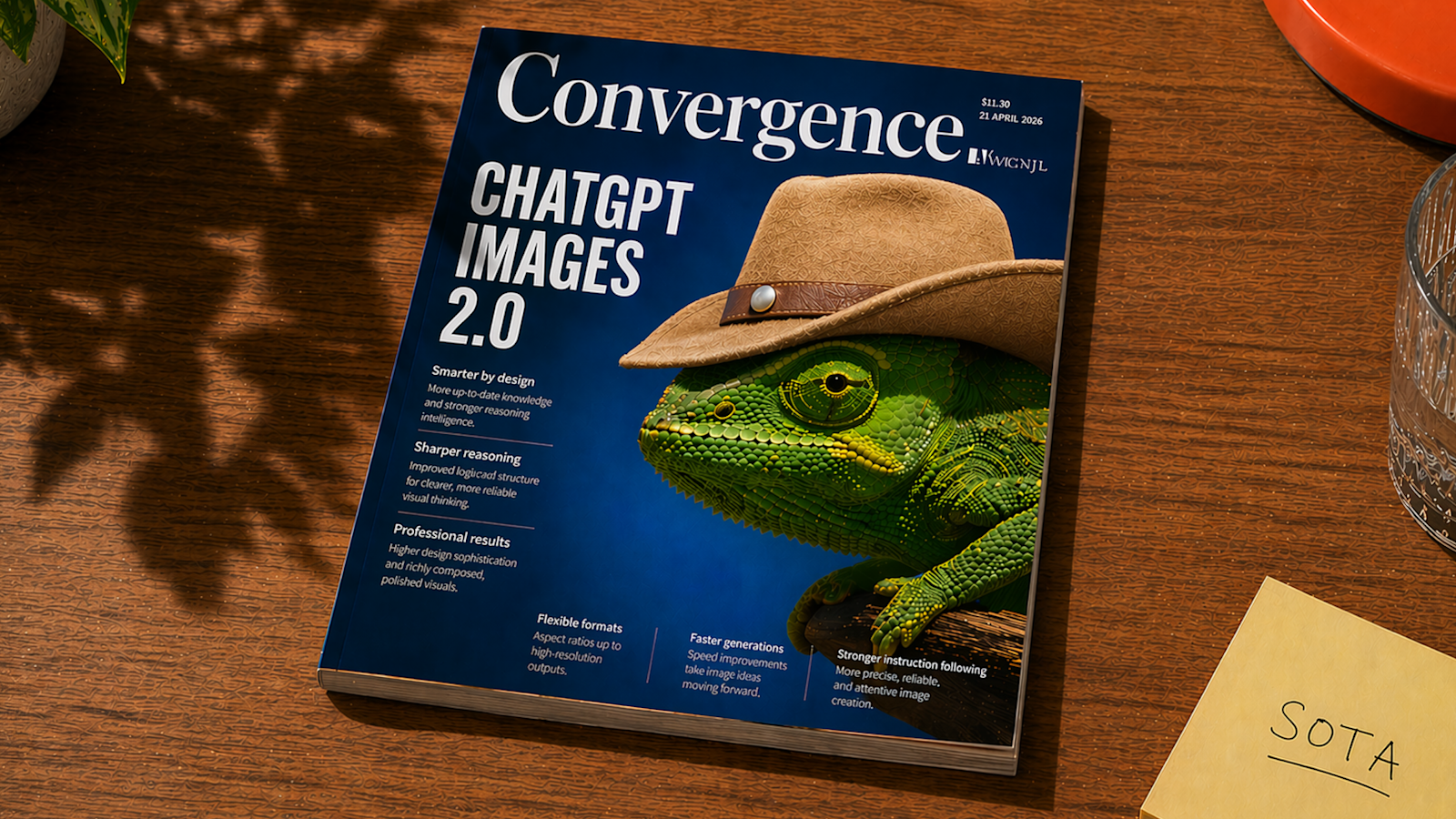
ChatGPT Images 2.0
OpenAI is launching ChatGPT Images 2.0 with major upgrades to image generation capabilities. Watch the livestream announcement at https://openai.com/live/
OpenAI is positioning this as a direct competitor to established image generation tools, suggesting they're confident enough to challenge the current market leaders
OpinionsRead
The "just wait 6 months" argument from 2025 survived exactly one iteration
Throughout 2025 the standard response to any complaint about an LLM was some version of "just wait 3-6 months, the next generation will handle this effortlessly." The argument was everywhere. Every limitation was temporary, every missing capability was a few iterations away, every autonomous agent demo was a preview of imminent reality.
It's April 2026 now and worth checking how that held up.
On r/ClaudeAI this week there's a long thread about Opus 4.7 where multiple users argue it's a regress
OpinionsRead
Mistral Medium 3.5 on AMD Strix Halo: Painfully Slow (Plan for Overnight Runs)
Someone actually tested Mistral Medium 3.5 on AMD's new Strix Halo chip, and the results are... not great. For a 48k-token prompt with 4k thinking tokens, it took about 2 hours just to get an answer about code architecture. Yeah, you read that right—two hours. The takeaway: if you want to run this locally on Strix Halo, queue it up before bed. The technical setup involved heavy optimization (Q5_K_XL quantization, GPU acceleration with -ngl 999, cache reuse), but even with all that tuning, it's still a crawl. Not exactly the "instant local AI" dream, but hey, at least it works.

Tech Blogger Take
Students are ditching AI tool stacks, and honestly, they're right
A university student just called out the entire AI productivity guru ecosystem, and it's beautiful. While everyone's building elaborate workflows with ChatGPT for brainstorming, Claude for writing, Perplexity for research, and NotebookLM for synthesis, actual students are saying 'this is exhausting.' They're switching between apps, losing context, managing different conversation histories, and dealing with inconsistent outputs. The friction isn't worth the marginal gains. What's fascinating is this mirrors what happened with productivity apps — remember when everyone had 12 different tools for task management? The winners were always the ones that did 80% of everything reasonably well, not the specialists. Students are choosing cognitive ease over theoretical optimization, and they're probably making the smarter choice.
AI Analysis
Education Technology
highStop building complex AI workflows and focus on one tool that handles 80% of student needs seamlessly
The biggest EdTech companies are quietly simplifying their AI offerings because students abandon multi-tool workflows within weeks
Your students are choosing the path of least resistance — if your platform isn't that path, they're using something else
Job Impact Analysis
Academic Researcher
OpportunityThis workflow friction insight reveals why many researchers stick with basic ChatGPT despite having access to specialized tools
Audit your current AI workflow — if you're using more than 2 tools regularly, consolidate to your most versatile one
Educational Consultant
Role ShiftStudents are rejecting the multi-tool approach consultants keep recommending, creating a gap between advice and reality
Test single-tool workflows with real students before recommending complex AI stacks to institutions