FastVLA Just Got Open-Sourced—And It's Running 5Hz Robotics on an L4
FastVLA 開源了!竟然能在 L4 晶片上跑 5Hz 機器人控制
Someone just dropped FastVLA as open-source, and they got real-time robotics working at 5Hz on an L4 chip. That's the kind of efficiency that usually makes roboticists lose their minds. There's a full thread with benchmarks and the repo link if you want to dig into how they pulled it off.
Tech Blogger Take
Someone just cracked the code on real-time robot vision. Your garage robotics project is about to get very interesting.
The robotics world has been waiting for this moment for years. FastVLA—a vision-language-action model that can actually think and act in real-time—just went open-source, and the numbers are absolutely bonkers. We're talking 5Hz performance on an L4 chip, which means your robot can see, understand, and decide what to do five times per second on hardware that costs less than a decent gaming laptop. This isn't some academic paper with cherry-picked demos—there are real benchmarks, real code, and real robots moving around because of it. The thread is packed with technical details that'll make any roboticist's heart race. What blows my mind is that we've gone from "maybe someday robots will understand what they see" to "here's the code, go build something" in what feels like overnight. The barrier between having a cool robotics idea and actually building it just got obliterated.
VerdictDrop everything and star that GitHub repo—the future of robotics just became open-source and affordable.
1Search GitHub for 'FastVLA' and clone the repository
2Follow the setup instructions to install dependencies and download model weights
3Run the provided benchmarks to test 5Hz performance on your hardware
Before
Robotics projects stuck with slow cloud APIs or requiring $10K+ hardware setups that take months to get working
After
Real-time robot vision running locally on affordable hardware that you can iterate on in your garage
AI Analysis
Robotics & Automation
high
Action Required
Clone the FastVLA repo immediately and benchmark it against your current vision-language stack
Key Insight
This is the first open-source VLA that can actually hit real-time performance on consumer hardware—most teams are still stuck with cloud APIs or $10K+ setups
Why It Matters
Your robotics prototypes just became 10x cheaper to build and infinitely easier to iterate on
Job Impact Analysis
Robotics Engineer
Role Shift
Why It Impacts
Real-time vision-language processing on affordable hardware eliminates the biggest bottleneck in autonomous robotics development
How to Adapt
Start experimenting with FastVLA this week—your next robot demo could run on hardware that costs less than your laptop
AI Research Engineer
Opportunity
Why It Impacts
Open-source VLA with proven real-time performance gives researchers a new baseline for multimodal AI applications
How to Adapt
Study their optimization techniques—this efficiency breakthrough could apply to your own model architectures
A Vision-Language-Action model that can see through cameras, understand what it's looking at, and decide what physical actions to take—basically the brain that connects robot eyes to robot hands, which FastVLA just made blazingly fast.
L4 Chip(L4晶片)
NVIDIA's mid-range AI accelerator chip that's way more affordable than their flagship H100s—the fact that FastVLA runs real-time robotics on this hardware is what makes it accessible to normal humans instead of just Google.
5Hz Performance(5赫茲性能)
Processing speed that updates five times per second—in robotics, this means your robot can react to what it sees almost instantly instead of the sluggish 1Hz that makes robots look drunk.
Related Articles
OpinionsRead
OpenAI Livestream
OpenAI is hosting a livestream event. Details about the specific announcements, product launches, or demonstrations will be revealed during the broadcast.
The last time OpenAI did an unannounced livestream, they dropped GPT-4 Turbo and changed pricing overnight
OpinionsRead
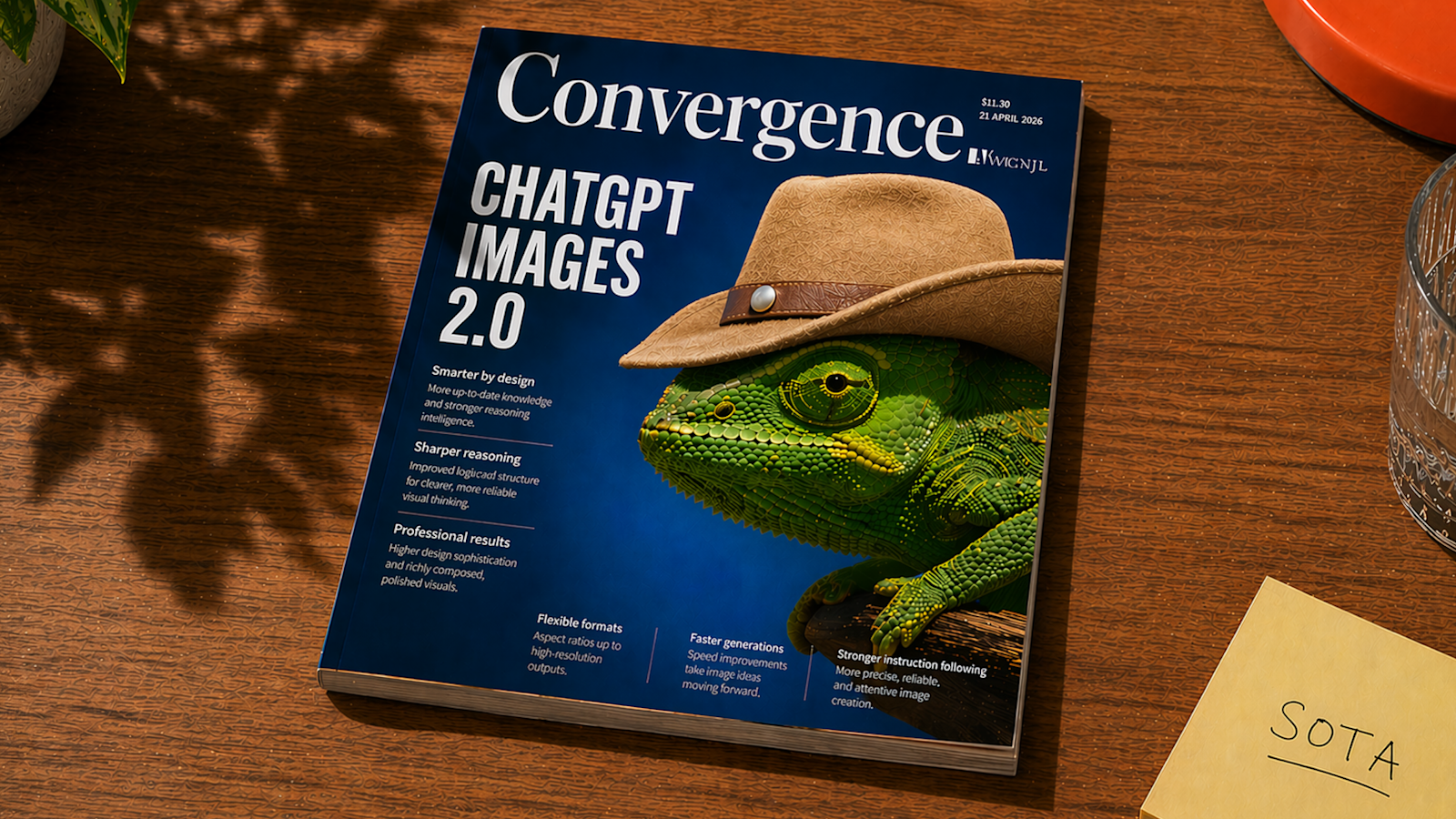
ChatGPT Images 2.0
OpenAI is launching ChatGPT Images 2.0 with major upgrades to image generation capabilities. Watch the livestream announcement at https://openai.com/live/
OpenAI is positioning this as a direct competitor to established image generation tools, suggesting they're confident enough to challenge the current market leaders
OpinionsRead
The "just wait 6 months" argument from 2025 survived exactly one iteration
Throughout 2025 the standard response to any complaint about an LLM was some version of "just wait 3-6 months, the next generation will handle this effortlessly." The argument was everywhere. Every limitation was temporary, every missing capability was a few iterations away, every autonomous agent demo was a preview of imminent reality.
It's April 2026 now and worth checking how that held up.
On r/ClaudeAI this week there's a long thread about Opus 4.7 where multiple users argue it's a regress
OpinionsRead
Mistral Medium 3.5 on AMD Strix Halo: Painfully Slow (Plan for Overnight Runs)
Someone actually tested Mistral Medium 3.5 on AMD's new Strix Halo chip, and the results are... not great. For a 48k-token prompt with 4k thinking tokens, it took about 2 hours just to get an answer about code architecture. Yeah, you read that right—two hours. The takeaway: if you want to run this locally on Strix Halo, queue it up before bed. The technical setup involved heavy optimization (Q5_K_XL quantization, GPU acceleration with -ngl 999, cache reuse), but even with all that tuning, it's still a crawl. Not exactly the "instant local AI" dream, but hey, at least it works.


Tech Blogger Take
Someone just cracked the code on real-time robot vision. Your garage robotics project is about to get very interesting.
The robotics world has been waiting for this moment for years. FastVLA—a vision-language-action model that can actually think and act in real-time—just went open-source, and the numbers are absolutely bonkers. We're talking 5Hz performance on an L4 chip, which means your robot can see, understand, and decide what to do five times per second on hardware that costs less than a decent gaming laptop. This isn't some academic paper with cherry-picked demos—there are real benchmarks, real code, and real robots moving around because of it. The thread is packed with technical details that'll make any roboticist's heart race. What blows my mind is that we've gone from "maybe someday robots will understand what they see" to "here's the code, go build something" in what feels like overnight. The barrier between having a cool robotics idea and actually building it just got obliterated.
Action
馬上試用Robotics projects stuck with slow cloud APIs or requiring $10K+ hardware setups that take months to get working
Real-time robot vision running locally on affordable hardware that you can iterate on in your garage
AI Analysis
Robotics & Automation
highClone the FastVLA repo immediately and benchmark it against your current vision-language stack
This is the first open-source VLA that can actually hit real-time performance on consumer hardware—most teams are still stuck with cloud APIs or $10K+ setups
Your robotics prototypes just became 10x cheaper to build and infinitely easier to iterate on
Job Impact Analysis
Robotics Engineer
Role ShiftReal-time vision-language processing on affordable hardware eliminates the biggest bottleneck in autonomous robotics development
Start experimenting with FastVLA this week—your next robot demo could run on hardware that costs less than your laptop
AI Research Engineer
OpportunityOpen-source VLA with proven real-time performance gives researchers a new baseline for multimodal AI applications
Study their optimization techniques—this efficiency breakthrough could apply to your own model architectures